


An executor in British Columbia is responsible for managing a deceased person’s estate, paying debts, and distributing assets to beneficiaries according to the will. When an executor refuses to act, the probate process can stall, creating delays, confusion, and added stress for everyone involved. In many cases, the executor may step aside voluntarily, but if they do not, the court can appoint someone else to handle the estate and move the process forward.
At Onyx Law Group, we understand how frustrating it can be when an executor refuses to act, and estate matters are left unresolved. Our team has helped clients across British Columbia handle probate disputes, protect beneficiary rights, and take legal steps to move estates forward. We take the time to explain your options clearly and work toward practical solutions that reduce unnecessary stress during an already difficult time. If you are dealing with an unresponsive executor, contact us today to discuss your situation and learn how we may be able to help.
In this blog, we will explain what can happen when an executor refuses to act in BC, the legal options available to beneficiaries, and the steps you can take to help move the estate process forward.
What Are the Responsibilities of an Executor in BC?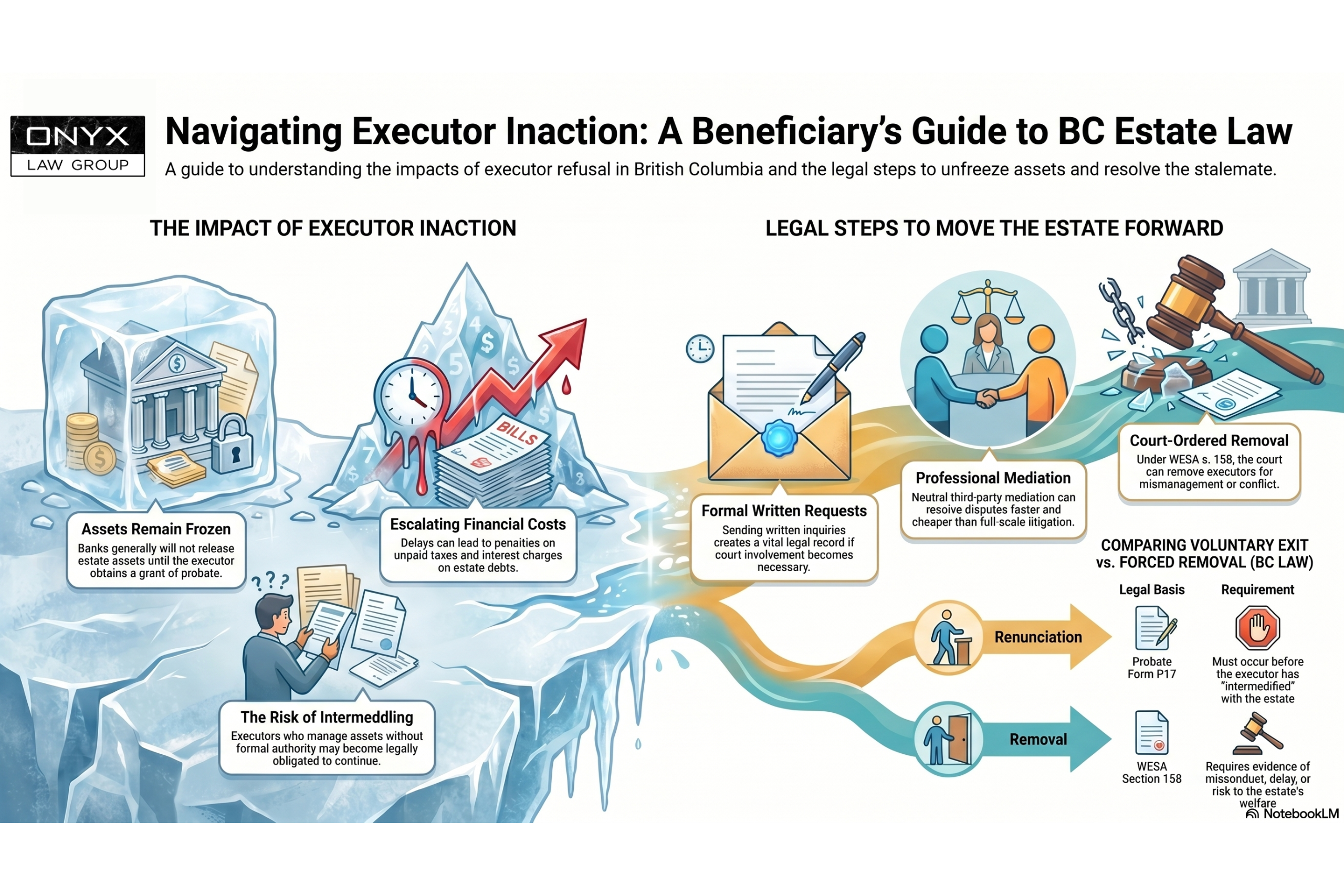
An executor plays an important role in handling a person’s estate after they pass away. In British Columbia, an estate executor carries out the instructions in the will and makes sure the deceased’s estate is managed properly. This position comes with legal duties and can involve a lot of organization, communication, and financial aspects of estate administration.
One of the main responsibilities of an executor is to manage and protect estate assets. This can include locating bank accounts, securing property, collecting valuables, and keeping records of everything that belongs to the deceased’s assets. Executors may also need to arrange property appraisals or ensure certain assets are sold promptly before distributing them to beneficiaries.
Executors are also responsible for paying bills, debts owed, taxes, and other expenses connected to the estate. Before beneficiaries receive their inheritance, the executor must ensure that they properly handle outstanding bills, loans, and taxes. In British Columbia, this process can involve filing taxes and making sure the estate complies with legal and financial obligations.
Communicating and answering questions is another important part of the executor’s duties. Beneficiaries often rely on the executor for updates about the estate administration process, timelines, and distributions. Clear and honest communication can help reduce confusion and prevent disputes between family members during what is already a difficult time.
In British Columbia, an executor’s responsibilities are primarily governed by the Wills, Estates and Succession Act, the Trustee Act, and the Supreme Court Civil Rules. Together with BC case law, these laws establish the core duties executors must follow, including the fiduciary obligation to act in the best interests of the estate, the duty to keep proper accounts, and the responsibility to distribute assets according to the terms of the will.
Fulfilling these duties carefully is important because executors are legally obligated to carry out their responsibilities and may need to prepare a final report or manage ongoing trusts when required. While the role can feel overwhelming, understanding these obligations and seeking legal guidance when necessary can help executors manage the process with confidence.
Why Might an Executor Refuse to Act?
Being named as an executor in a will can seem like an honor, but not everyone is prepared to take on the responsibility. In British Columbia, an executor has the right to refuse the role if they feel unable to handle the duties involved. There are many personal, emotional, and legal reasons why someone may decide not to act as an executor, especially when financial interests are involved.
For some people, the decision is based on personal reasons or emotional stress. Handling a loved one’s estate after a death can feel overwhelming, especially during a time of grief. Family disagreements and conflicts between difficult beneficiaries can also make the role emotionally draining and difficult to manage.
Another common reason is the lack of time or resources needed to properly handle the estate. Acting as an executor often requires attending meetings, organizing paperwork, communicating with banks, and dealing with legal matters. Someone with a demanding job, health concerns, or other responsibilities may feel they cannot give the role the attention it requires.
Legal and logistical issues can also discourage someone from acting as an executor. Some estates are highly complex and may involve businesses, multiple properties, investments, or debts. Managing these matters and possible legal complications can take months or even years, and the process may become stressful without legal or financial support.
Potential legal liability is another major concern for executors. Executors are expected to act honestly and responsibly while following British Columbia estate laws. If mistakes are made, such as improper distribution of assets or unpaid taxes, the executor could face legal consequences. Because of this, some individuals choose to step aside rather than risk handling a complicated estate incorrectly.
An executor who has not yet accepted the role or taken any steps to manage the estate can formally step aside by filing a renunciation with the Supreme Court of British Columbia. However, once an executor has begun handling estate assets or managing estate affairs, renunciation is generally no longer an option. In those situations, the executor typically must apply to the court for permission to withdraw. This distinction is important because it determines the legal options available to the executor moving forward.
How an Executor Formally Renounces in BC
In British Columbia law, an executor formally renounces their appointment by completing a legal process set out under the Wills, Estates, and Succession Act and, in some situations, the Trustee Act. In most cases, the process is done before the executor, personal representative, or other person appointed has taken any steps to manage the estate.
The key requirement is a written renunciation, usually filed in the Supreme Court, confirming that the person does not wish to act as executor. Once properly filed and the court approves the related probate process, the individual is treated as if they never accepted the role in the first place, which helps keep the estate administration moving without delay and allows another estate administrator to step in if necessary.
Practically, the process is done using Probate Form P17 (Renunciation of Probate) and must comply with the Supreme Court Civil Rules, including Rule 25-1(4), which governs probate procedures and filings. This step is important because it creates legally valid certainty for everyone involved (beneficiaries, alternate executors, and the court), especially where granting administration becomes necessary after a renunciation. If an executor has already started handling estate matters (intermeddled), they generally cannot use this simple renunciation process and may need a court application instead.
What Counts as ‘Intermeddling’ and Why It Matters
In British Columbia estate law, intermeddling refers to any actions taken by a named executor that show they have started handling the estate, including the financial aspects of managing the deceased’s assets, even if they have not formally accepted the role. The concept matters because it can permanently change an executor’s legal position under the Wills, Estates, and Succession Act. Once intermeddling occurs, the person is often treated as having accepted the role and becoming legally obligated, which can remove the option to simply renounce and step away.
Common examples of intermeddling include paying bills or estate debts from estate funds, ensuring estate property is sold promptly, collecting rent from estate assets on an ongoing basis, or actively managing bank accounts tied to the deceased. Even smaller actions, like arranging payment of funeral expenses using estate funds, may count depending on the circumstances. It matters so much because once intermeddling happens, the executor may need a court application under the Supreme Court civil rules to be released, rather than filing a simple renunciation unless the court directs otherwise.
What Are the Legal Consequences of Executor Refusal in BC

Acting as an executor can be a challenging responsibility, especially when personal, emotional, and financial pressures are involved. While some people may feel unable to take on the role, refusing to act as an executor can sometimes create delays and complications for the estate and its beneficiaries. In certain situations, there may also be legal implications tied to the decision and legal requirements under BC estate law, making it important to understand the possible consequences before stepping aside.
1. Executor May Face Removal by Court
An executor is expected to manage an estate honestly and in the best interests of the beneficiaries. However, there are situations where beneficiaries or interested parties may ask the court to remove an executor. In British Columbia, this usually involves filing a petition with the court and providing evidence that the executor is not properly handling their responsibilities under statute or common law duties. The court will review the situation carefully before deciding whether removal is necessary.
One common legal ground for removal is a breach of duty. This can happen if the executor mismanages estate funds, fails to communicate with beneficiaries, delays the administration process without reason, or refuses to follow the terms of the will. A conflict of interest can also become a serious issue. For example, if an executor uses estate assets for personal benefit or makes decisions that unfairly favor them over other beneficiaries, the court may decide they are no longer suitable for the role.
Imagine a situation where an executor repeatedly ignores requests for updates, fails to pay estate debts, and transfers estate property to themselves without approval. Beneficiaries may become concerned that the estate is being mishandled and seek legal help. If the court finds evidence of misconduct or conflict of interest, it can remove the executor and appoint someone else to protect the estate and ensure the administration process is handled fairly.
2. Assets May Be Frozen
Estate assets stay locked until probate is granted. In British Columbia, banks and other institutions generally will not release significant estate assets until the executor obtains a grant of probate from the Supreme Court of British Columbia.
This is a normal requirement, not a penalty, but when an executor refuses or fails to apply for probate, the assets remain inaccessible. Beneficiaries cannot receive distributions, and funds needed for estate expenses or dependents remain tied up until someone moves the application forward, which can sometimes contribute to penalties or interest charges on unpaid obligations.
3. Beneficiaries May Take Legal Action
Beneficiaries in British Columbia have legal rights when it comes to the administration of an estate. They are entitled to receive information about the estate and expect the executor to manage assets fairly and responsibly. If beneficiaries believe the executor is acting improperly or failing to carry out their duties, they may have the right to challenge those actions through legal channels.
There are several legal actions beneficiaries can pursue depending on the situation. They may ask the court to require the executor to provide a full accounting of the estate, challenge delays in distribution, or request the removal of the executor for misconduct or conflict of interest. In some cases, beneficiaries may also dispute the validity of the will itself if they believe there are concerns about fraud, undue influence, or lack of capacity.
Legal proceedings can lead to different outcomes depending on the facts of the case. The court may order the executor to correct mistakes, provide financial records, or step down from the role entirely. In other situations, disputes may be settled through negotiation or mediation before reaching trial. Taking legal action can be stressful, but it is sometimes necessary to protect the interests of beneficiaries and ensure the estate is handled properly.
What Is the Impact on Estate Distribution When an Executor Fails to Act?
When problems arise during the administration of an estate, beneficiaries are often the people most directly affected. Delays, lack of communication, or concerns about how the deceased’s estate is being managed can create frustration and uncertainty for everyone involved. In some situations, beneficiaries may feel they have no choice but to protect their interests through legal action, which can lead to several important impacts on the estate and the people connected to it.
1. Delays in Asset Distribution
When an executor refuses to act or delays handling the estate, the distribution of assets can slow down significantly. Beneficiaries may have to wait much longer to receive inheritances while the court appoints a new executor or resolves disputes, including unresolved debts owed or ongoing trusts. These delays can create stress and uncertainty, especially for family members who may depend on those funds for living expenses or other financial needs.
Long delays can also increase the cost of administering the estate. Legal fees, property expenses, taxes, and maintenance costs may continue to build while the estate remains unresolved. In some cases, assets may lose value over time, affecting the average market value or average market assessment and leaving beneficiaries with less than expected. This is why resolving executor issues quickly is often important for protecting both the estate and the people connected to it.
2. Appointment of a New Executor
When an executor renounces or is removed, the next person entitled to apply is determined by the priority order in WESA and the Supreme Court Civil Rules. This typically follows the alternate executor named in the will, and then a beneficiary or other interested person applying for a grant of administration with the will annexed, which may require identifying the gross aggregate value or gross aggregate of estate assets.
Choosing a suitable executor is an important step. The person selected should be trustworthy, organized, and capable of handling financial and legal matters. In many cases, family members, close friends, or professional trustees may be considered. The court will usually look for someone who can act fairly, communicate well with beneficiaries, and manage the estate without conflicts of interest.
The court plays a major role in ensuring the appointment process is handled properly. If there are disputes between beneficiaries or concerns about the proposed executor, the court may step in to make the final decision. The goal is to appoint someone who will protect the estate, follow the law, and carry out the wishes outlined in the will as smoothly as possible.
What Are the Legal Grounds to Remove an Executor in BC?

An executor has a legal duty to manage an estate honestly, responsibly, and in the best interests of the beneficiaries. However, there are situations where beneficiaries may believe the executor is not properly handling the role. In British Columbia, the court has the authority to remove an executor when there are valid legal reasons to do so. The process usually begins with a court application supported by evidence showing why removal may be necessary.
The court will carefully review the circumstances before making a decision. Not every disagreement or delay is enough to justify removing an executor. The court generally looks for serious issues that could harm the estate or the beneficiaries. The main goal is to protect the estate and ensure it is administered fairly and efficiently.
One common ground for removal is mismanagement of the estate. This can include mishandling estate funds, failing to pay debts or taxes, keeping poor financial records, or using estate assets for personal benefit. If an executor’s actions place the estate at risk or create financial harm, the court may decide that removal is necessary.
Withholding information from beneficiaries can also become a major problem. Beneficiaries have the right to receive reasonable updates about the administration process and the status of the estate. When an executor ignores requests for information, creates unnecessary delays, or refuses to provide financial records, it can damage trust and lead beneficiaries to seek legal action.
The Supreme Court of British Columbia can remove and replace an executor under section 158 of the Wills, Estates and Succession Act and under the court’s inherent jurisdiction over estates. The court’s guiding principle, established in BC case law, is the welfare of the beneficiaries and the proper administration of the estate, not the punishment of the executor. Because removal applications require evidence and a court hearing, beneficiaries often consult an estate lawyer early to assess whether the conduct meets the WESA s. 158 threshold.
BC Court Standards for Removing an Executor
In British Columbia, the court’s approach to removing an executor is grounded in both statute and case law, most notably Wills, Estates and Succession Act section 158 and key decisions such as Nieweler Estate and Radford v Wilkins. Together with common law principles, these authorities form what is often referred to as the practical removal framework.
The court is not focused on minor disagreements or personality conflicts. Instead, it asks a sharper question: is the executor’s conduct putting the proper administration of the estate at risk?
Under this framework, the court may remove an executor where there is evidence of misconduct, conflict of interest, delay, or a failure to act in the best interests of the estate. The decisions in Nieweler Estate and Radford v Wilkins show that the court will intervene where a trust has broken down or where administration has become ineffective or harmful to beneficiaries.
The guiding principle is always the protection of the estate, not the preference of any individual. In practice, this means removal is a serious remedy, but one the court will use when the executor’s actions fall below the standard required under BC law, legal requirements, and procedure governed by the Supreme Court civil rules.
When BC Courts Will NOT Remove an Executor
In British Columbia, courts are generally reluctant to remove an executor unless there is clear evidence that the estate is being mismanaged or placed at real risk. The starting point is always respect for the testator’s choice, as reflected in the Wills, Estates, and Succession Act. Even if beneficiaries are unhappy with delays, communication issues, administrative friction, or difficult beneficiaries, these concerns alone usually fail to justify removal.
BC courts will typically not remove an executor where the complaint is limited to personality conflict, minor delays, or disagreement over strategy, especially if the executor is otherwise acting within their authority. Even where tensions are high, the court seeks evidence of serious misconduct, conflict of interest, or a breakdown that threatens proper estate administration or a breakdown that threatens estate matters, such as ongoing trusts. The threshold is intentionally high, and the decisions under the Supreme Court Civil Rules reinforce that removal is a protective remedy, not a tool to replace an executor simply because beneficiaries prefer someone else.
What Are the Steps to Take if an Executor Refuses to Act?

When an executor refuses to act, delays the probate process, or stops communicating, it can create stress and confusion for beneficiaries and family members. While some delays may have reasonable explanations, ongoing inaction can prevent debts from being paid, assets from being distributed, and the estate from moving forward. If you believe an executor is not fulfilling their responsibilities, there are several practical and legal steps you can take to protect the estate and push the process forward.
Step 1: Communicate Directly With the Executor
Start by reaching out to the executor calmly and professionally to ask for updates about the estate administration. In some cases, misunderstandings, personal issues, or a lack of probate experience may be causing delays rather than intentional misconduct.
Step 2: Request Information in Writing
If verbal conversations are not productive, send a written request asking for specific information about the estate and the executor’s plans. Written communication creates a record of your efforts and may become useful later if court involvement becomes necessary.
Step 3: Review the Probate Timeline and Duties
Take time to understand the executor’s legal responsibilities and whether the delay is actually unreasonable under BC laws. Some estate matters naturally take months to resolve, but long periods of inactivity without explanation can be a warning sign.
Step 4: Gather Relevant Estate Documents
Collect copies of the will, probate filings, court notices, financial statements, or any communication related to the estate. Having organized records can help you better understand what has or has not been done and strengthen your position if legal action becomes necessary.
Step 5: Consider Mediation Before Going to Court
Mediation allows beneficiaries and the executor to discuss concerns with the help of a neutral third party. This option is often faster, less expensive, and less confrontational than litigation, especially when family relationships are involved.
Step 6: Speak With a Probate Lawyer
A BC estate lawyer can review the situation, explain your legal rights, and determine whether the executor may be violating fiduciary duties. The lawyer can also correspond with the executor on your behalf, which sometimes prompts action without a court application.
Step 7: Petition the Probate Court for Intervention.
If the executor continues refusing to act, beneficiaries may ask the Supreme Court of British Columbia to step in and issue orders requiring the executor to perform their duties. Depending on the situation, the court may order accountings, impose deadlines, or require the executor to explain the delays.
Step 8: Request Removal of the Executor if Necessary
In serious cases involving neglect, misconduct, conflicts of interest, or misuse of estate assets, the court may remove the executor entirely. A replacement executor or administrator, or in some situations the public guardian and trustee, may then become involved through granting administration to continue handling the estate properly.
Step 9: Explore Alternative Dispute Resolution Options
Beyond mediation, some estate disputes are resolved through settlement negotiation or a settlement conference within the court process. Note that the notice of dispute procedure under the Supreme Court Probate Rules also lets an interested person formally flag a concern before a grant is issued.
Step 10: Continue Monitoring the Estate Administration
Even after action is taken, continue keeping records of court filings, financial updates, and communication involving the estate. Staying informed helps ensure the probate process moves forward appropriately and that the estate is handled according to the law and the wishes of the deceased.
Comparing Your Legal and Practical Options When an Executor Refuses to Act in BC
When an executor refuses to act, beneficiaries often have several possible ways to respond depending on the seriousness of the situation. Some options are quicker and less confrontational, while others may involve formal legal action and greater costs. To help you better understand the advantages and tradeoffs of each approach, the table below compares some of the most common options available in British Columbia.
| Option | Best For | Advantages | Potential Drawbacks |
|---|---|---|---|
| Communicating Directly With the Executor | Minor delays or misunderstandings | Low cost, preserves family relationships, may resolve issues quickly | May not work if the executor refuses to cooperate |
| Sending Written Requests | Creating a formal record of concerns | Documents communication and may encourage action | Can increase tension between family members |
| Mediation | Family disputes and communication breakdowns | Less expensive and less stressful than court | Requires both parties to participate willingly |
| Hiring an Estate Lawyer | Complex estates or ongoing executor inaction | Provides legal guidance and protects beneficiary rights | Legal fees may increase estate-related costs |
| Petitioning the Court | Serious delays or misconduct | Court can issue orders and force accountability | Probate litigation can take time and become expensive |
| Requesting Executor Removal | Mismanagement, conflicts of interest, or breach of duty | Allows appointment of a more suitable executor | Requires strong evidence and court approval |
| Alternative Dispute Resolution | Avoiding full litigation | Can resolve disputes more privately and efficiently | May not fully resolve deeply contested disputes |
Ready to Take Action Against an Executor?
When an executor refuses to act in British Columbia, it can delay the probate process and create unnecessary stress for beneficiaries and family members. While some delays may be understandable, prolonged inaction can prevent the estate from being properly managed and distributed. In many cases, beneficiaries have options to address the issue, including communicating with the executor, seeking mediation, or asking the court to intervene when necessary.
If you are dealing with an unresponsive or unwilling executor, it is important to understand your rights and act before the situation becomes more complicated. An experienced probate lawyer can review the circumstances, explain the legal remedies available in BC, and help protect the interests of the estate and its beneficiaries.
Is an executor’s refusal to act leaving your family stuck and unsure what to do next? At Onyx Law Group, we help clients across British Columbia resolve probate disputes with clear legal guidance and practical support. Our team of estate and probate lawyers in BC knows how to address executor delays and take action when an estate needs to move forward. Reach out to us today to get trusted advice and the next steps for your situation.
Frequently Asked Questions
This FAQ section answers common questions about what happens when an executor refuses to act in British Columbia. It explains the possible legal consequences, delays, and options available to beneficiaries in a simple and easy-to-understand way.
What Are the Duties of an Executor in British Columbia?
An executor is responsible for managing the estate, paying debts and taxes, and distributing assets according to the will. They must also communicate with beneficiaries and handle the estate honestly and responsibly.
What Can Happen if an Executor Refuses to Act in British Columbia?
If an executor refuses to act, the administration of the estate may be delayed until a new executor or administrator is appointed. This can lead to added legal costs, frozen assets, and frustration for beneficiaries.
Can an Executor Be Forced to Act in British Columbia?
In most cases, a person cannot be forced to serve as an executor if they choose not to take on the role. The court may instead appoint another suitable person to manage the estate.
How Can Beneficiaries Protect Themselves if an Executor Refuses to Act in BC?
Beneficiaries can seek legal advice and apply to the court for the appointment of a new executor or administrator. Keeping records of delays and communication can also help support their position if legal action becomes necessary.
Are There Consequences for an Executor Who Refuses to Act in British Columbia?
Simply refusing to act before taking on the role usually does not lead to penalties. However, if the executor has already started handling the estate and then fails to perform their duties properly, they could face legal challenges or possible removal by the court.
How Does an Executor Formally Renounce in British Columbia?
An executor in British Columbia can formally renounce their role by signing and filing the required renunciation documents with the court before taking active steps to manage the estate. This tells the court that they do not wish to act as executor.
What Is ‘Intermeddling’ and Why Does It Matter?
Intermeddling occurs when a person starts acting as an executor without officially accepting the role or being authorized to do so. This may include selling assets, paying debts, or managing estate property. It matters because someone who intermeddles may still be treated as having accepted executor responsibilities.
Who Becomes Executor if the Named Executor Renounces?
If the named executor renounces, the replacement named in the will may take over. If no alternate executor is listed, the court may appoint another suitable person to administer the estate.
How Long Does an Executor Have to Apply for Probate in BC?
There is no strict deadline requiring an executor to apply for probate immediately in British Columbia. However, unnecessary delays can create complications and may lead to concerns from beneficiaries or other interested parties.
Can a Beneficiary Be Appointed as the Replacement Executor?
Yes, a beneficiary can be appointed as a replacement executor in many situations. It is common for beneficiaries, such as spouses or adult children, to serve in this role if they are suitable and willing to act.
What Does It Cost to Apply to Remove an Executor in BC?
The cost can vary depending on the complexity of the case and whether there are disputes involved. Expenses may include court filing fees, legal fees, and other costs connected to the application process.
What Is the Difference Between an Executor and an Administrator?
An executor is a person named in a will to manage and distribute the estate. An administrator is appointed by the court when there is no valid will or when no executor is available or willing to act. Both roles have similar responsibilities, but the method of appointment is different.
Video FAQ
What Happens If an Executor Refuses to Act in BC?

A named executor can step aside by signing a formal renunciation, as long as they haven’t started acting as executor.
Disclaimer: The information on this page is general legal information about British Columbia law, not legal advice for any specific situation. Reading this page does not create a solicitor-client relationship. BC law changes, and the procedure that applies to a specific situation depends on facts not covered here. For advice on your situation, consult a qualified British Columbia estate lawyer directly. Past results, illustrative scenarios, and reference to typical fact patterns do not guarantee similar outcomes in any specific case.