


Putting a house in trust means transferring legal ownership of the home to a trust that a trustee manages for your beneficiaries. In British Columbia it can help pass the property outside your estate and avoid probate, but it can trigger tax and land-transfer consequences, so the type of trust you choose matters.
Putting a house in trust means transferring ownership of your home to a legal trust that holds and manages the property for your chosen beneficiaries. Canadian homeowners often use trusts as part of an estate plan to simplify how property passes on, keep matters private, and, in some cases, skip probate. Whether a trust is right for you comes down to your goals, the type of trust you set up, and the laws in your province.
Putting your house in a trust can protect it, but the wrong structure can create tax and control problems you didn’t see coming. Onyx Law Group helps BC families set up trusts that actually do what they’re meant to. Our estate planning is led by Sandy Minh Abley, a Best Lawyers in Canada “Leading Lawyer” in Trusts and Estates, a STEP member, and a Certified Financial Planner. Book a free 30-minute consultation with us today to structure it the right way.
In this blog, we will discuss the benefits of setting up a trust, including increased protection and the efficient transfer of property, and explain how to put a house in a living trust in Canada.
New to trusts in general? Start with our overview of how a living trust in Canada works, then come back here for the property side.
What Does It Mean to Put a House in Trust in Canada?

Putting a house in a trust means legally transferring ownership of your property to a trust that holds and manages it for the benefit of one or more beneficiaries. The trustee runs the property according to the terms of the trust agreement. For Canadian homeowners who want more say over how their property is managed and passed on, this is a common estate planning move.
A trust serves a different purpose than a will or a power of attorney. A will only takes effect after you die and directs how your estate gets distributed. A power of attorney lets someone manage your financial or legal affairs while you’re alive, in case you lose the capacity to do so yourself. A trust can start working during your lifetime and keep running after your death, depending on how you set it up.
Canada offers several types of trusts, but a revocable living trust is one of the most commonly discussed for estate planning. It lets the person who creates the trust keep control of the assets and adjust the terms during their lifetime. Irrevocable trusts carry different legal and tax consequences and tend to serve more specific planning goals.
According to the 2021 Census, approximately 66.5% of Canadian households own their home, making real estate the largest asset many families will eventually pass to the next generation. Protecting that asset is one of the main reasons homeowners look at a trust in the first place.
A trust can simplify how your property transfers, keep your affairs private, add a layer of financial protection, and spell out exactly how your home should be handled if you become incapacitated or pass away. Depending on the type of trust and your province’s rules, it may also help you avoid probate and, in some cases, shield assets. Trust laws and tax rules differ across the country, so it’s smart to get legal advice before you move a home into a trust.
How to Put Your House in a Trust: Step-By-Step Guide for Canadians
Putting your house in a trust involves creating a valid trust and legally transferring ownership of the property into that trust. While the process is similar across Canada, property laws, probate rules, and land registration requirements vary by province. Following the right steps helps ensure the transfer is legally valid and aligns with your estate planning goals.
Step 1: Confirm You Are Eligible to Create a Trust
You must be the legal owner of the property, be of legal age, and have the mental capacity to create a trust. The trust has to be established voluntarily and for a lawful purpose.
Step 2: Decide Whether to Hire a Lawyer or Do It Yourself
You can prepare a trust yourself using legal forms or online services, but that route carries a higher risk of mistakes, especially if your estate includes real estate, multiple beneficiaries, or tax considerations. Most homeowners hire an estate planning lawyer to draft the trust, make sure it complies with provincial law, and handle the property transfer correctly.
Step 3: Create the Trust Agreement
The trust agreement is the legal document that creates the trust. It names the trustee and beneficiaries and sets out how the property should be managed and distributed. Trust and tax rules get complicated fast, so professional legal advice usually pays for itself here.
Step 4: Choose the Trustee
Pick one or more trustees to manage the trust. Many people name themselves as the initial trustee and appoint a successor trustee to step in if they become incapacitated or die. Choose someone reliable who can handle financial and legal responsibilities.
Step 5: Transfer Your House Into the Trust
Creating the trust doesn’t automatically move your house into it. You have to legally transfer ownership by preparing and registering the required land transfer documents with your provincial land registry. Depending on the province, this may involve a transfer or conveyance document rather than a grant deed, which isn’t commonly used in Canada. Once it’s registered, the trust becomes the legal owner, and the trustee manages the property under the trust agreement.
Step 6: Review Any Existing Mortgage
If your home carries a mortgage, talk to your lender before you transfer the property into a trust. Mortgage terms vary, and some lenders require notice or consent before ownership changes hands. Confirming this ahead of time saves you from unexpected trouble.
Step 7: Complete Any Required Registrations
Depending on the type of trust, you may need to obtain a trust account number and meet annual tax reporting requirements with the Canada Revenue Agency. Your lawyer or tax advisor can tell you which obligations apply to your situation.
Step 8: Consider Provincial Rules
Each province has its own rules for land registration, probate, and property transfers. For example, British Columbia and Ontario have different land title procedures and probate fee structures. Local legal assistance helps ensure the transfer meets provincial requirements.
Step 9: Inform the Relevant Parties
Once the transfer is done, let your trustee, successor trustee, and beneficiaries know the trust exists. They should understand their responsibilities and know where the important documents, the trust agreement, and the property transfer records, are kept.
Dealing With Mortgages When Putting a House in Trust
Having a mortgage does not necessarily prevent you from putting your house into a trust, but it can affect how the transfer is handled. Before transferring ownership, review your mortgage agreement and speak with your lender. Some lenders allow transfers to certain types of trusts without issue, while others require advance notice or written consent. Transferring the property without following the mortgage terms could put you in breach of your loan agreement.
Think about future financing, too. Depending on your lender’s policies and the type of trust, refinancing, tapping home equity, or using the property as collateral can get more complicated. Before you complete the transfer, discuss the potential impact with both your lender and an estate planning lawyer to avoid unexpected delays, fees, or financing restrictions later.
What Are the Pros and Cons of Putting a House in Trust in Canada?
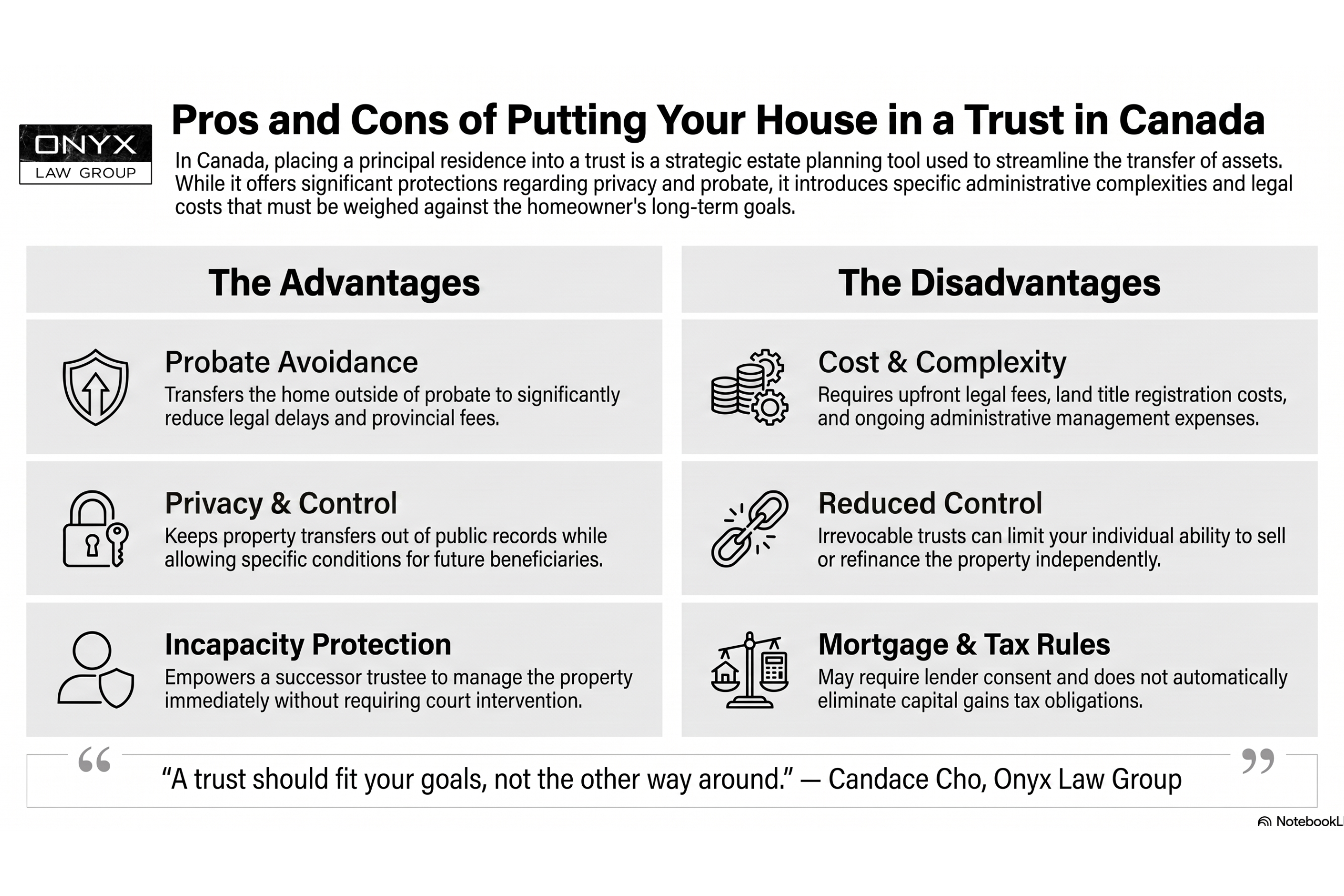
A trust can simplify estate planning, but it isn’t right for everyone. Candace Cho, a principal lawyer at Onyx Law Group, commonly says, “A trust should fit your goals, not the other way around.” The benefits depend on the type of trust you create, your financial situation, and the province where you live. Before making a decision, it is worth weighing both the advantages and the drawbacks.
Advantages of Putting Your House in a Trust
One of the biggest benefits is that a properly structured living trust can allow one of your most valuable assets, your home, to pass outside the probate process. This can reduce delays, lower probate costs where they apply, and make it easier for the trustee to transfer the property to your beneficiaries. Since probate rules and fees vary by province, the savings will differ across Canada.
Unlike wills, living trusts generally remain private and offer greater privacy and control. Unlike a will, which may become part of the public record during probate, a trust generally remains private. You can also decide who receives the property, whether they receive it after reaching a certain age, and under what conditions. This may help avoid family disputes. If you become incapacitated, a successor trustee can continue managing the property without court involvement.
In some situations, a trust may also support tax and estate planning. Certain trusts can provide tax planning opportunities depending on how they are structured, although they are subject to Canadian tax rules and reporting requirements.
Estate planning is becoming increasingly important as Canada’s population ages. Statistics Canada reports that nearly one in five Canadians (about 19%) is now aged 65 or older, meaning more families are beginning to plan how homes and other major assets will be managed during incapacity and transferred after death. Tax treatment varies, which is why legal, tax, and investment advice is worth getting before you create a trust.
Disadvantages of Putting Your House in a Trust
The main drawback is cost and complexity. Setting up a trust usually means legal fees, land title registration costs, and ongoing administrative expenses. Some trusts also come with annual tax filing and record-keeping obligations.
An irrevocable trust can also reduce your control over the property. Once your house is transferred, you generally cannot change or revoke the trust without meeting strict legal requirements. This may limit your ability to sell, refinance, or otherwise deal with the property independently.
There are also mortgage and tax considerations to keep in mind. If your home has a mortgage, your lender may require notice or consent before the transfer. And moving a house into a trust doesn’t automatically cut your taxes: capital gains rules, trust taxation, and provincial property laws all shape the outcome, which makes province-specific legal advice worthwhile.
Putting a House in Trust vs. Using a Will in Canada
Choosing between a trust and a will for your house comes down to how each one actually works. Both can move your property to your beneficiaries, but they differ on probate, privacy, cost, and how much control you keep.
| Feature/Aspect | Putting a House in Trust | Using a Will |
|---|---|---|
| Probate Process | A properly structured living trust can allow the house to pass outside probate. | The house usually goes through probate before it can be transferred to beneficiaries. |
| Privacy | Trusts generally remain private and are not part of the public probate record. | A will may become part of the public record once it enters probate. |
| Cost | Higher upfront costs due to legal fees, trust creation, and property transfer. Ongoing administration costs may also apply. | Lower upfront cost, but probate fees and estate administration costs may be incurred after death. |
| Control After Death | You can set detailed instructions on how and when beneficiaries receive the property. | The executor distributes the property according to the terms of the will after probate is completed. |
| Flexibility | Revocable living trusts can usually be changed during your lifetime, while irrevocable trusts offer limited flexibility. | You can update your will at any time as long as you have legal capacity. |
Not sure who does what in a trust? The settlor, trustee and beneficiary roles are explained in our living trust guide.
What Are the Common Mistakes to Avoid When Transferring Your House to a Living Trust in Canada?
The biggest mistake when transferring assets is failing to properly transfer title to the house. The trust deed will not be effective if the title change is not properly registered. Overlooking tax rules, inadequately documenting the trust’s terms, and failing to consult a lawyer are other common mistakes that have a significant negative impact.
How Much Does It Cost to Put a House in Trust in Canada?

The cost of putting a house in a trust varies depending on your circumstances. In most cases, you will pay legal fees to prepare the trust, draft the trust agreement, and transfer ownership of the property. You may also have to pay land title registration fees and other administrative costs. If you use a professional trustee, ongoing trustee or accounting fees may also apply.
A few factors affect the total. A simple trust with one property usually costs less than one involving multiple properties, several beneficiaries, or complex estate planning needs. Legal fees vary by lawyer, and land registration charges and other requirements differ from province to province.
The upfront cost can pay off later. A properly structured trust may let your house avoid probate, which saves your estate time and probate fees where they apply. How much you save depends on your province and your estate, so talk through the costs and benefits with an estate planning lawyer before you proceed.
Take Margaret, a retired homeowner in British Columbia. She wanted to put her house in a living trust to simplify the transfer of her estate to her two children, but she wasn’t sure how much it would cost or whether it was worth the investment. After speaking with an estate planning lawyer at Onyx Law Group, she got a clear breakdown of the legal fees, land title registration costs, and any ongoing expenses, plus advice tailored to her family’s goals.
With the trust properly structured and her home transferred into it, Margaret could stop worrying about it, knowing her estate plan reflected her wishes. Her family could avoid unnecessary probate delays where applicable, and the transition would go more smoothly for her loved ones down the road.
Tax Rules That Apply Once the House Is in the Trust
Two tax questions decide whether this structure makes sense for you. The first is the principal residence exemption: depending on the trust you use and who lives in the home, the exemption that normally shelters the gain on your house may no longer be available. The second is the deemed disposition that hits a trust every 21 years, which can create a tax bill on a property nobody has actually sold.
Both rules, and the planning around them, are covered in the tax section of our living trust in Canada guide. Run the numbers with a lawyer and an accountant before you transfer title, not after.
Ready to Put Your House in a Living Trust?
Putting your house in a living trust in Canada offers real advantages: avoiding probate, protecting your privacy, and giving you flexibility over how and when your property reaches your beneficiaries. Living trusts can also carry potential tax benefits and, with irrevocable trusts, protection from legal claims. They’re especially useful for Canadians with complex estates, or for anyone who wants a smooth, efficient transfer of property to loved ones.
That said, a living trust takes careful legal planning and has to comply with provincial rules. The drawbacks are real too and you can lose control over the property, and mortgages can complicate things. Given all of that, it’s worth working with an experienced estate lawyer who can guide you through the process, make sure the trust is structured properly, and help you make informed decisions that protect your assets and your family’s future.
Considering a living trust for your house but not sure where to start? Done right, it shields your home; done wrong, it backfires. Onyx Law Group’s estate planning is led by Sandy Minh Abley, a Best Lawyers “Leading Lawyer” in Trusts and Estates. Our experienced team of estate planning lawyers in British Columbia guides you through every step of creating a living trust, making sure it meets your goals while complying with Canadian laws. Contact us today for a free 30-minute consult.
Frequently Asked Questions
Putting your home in a trust can simplify how property transfers and support your estate planning goals. Here are answers to common questions about living trusts in Canada.
What Are the Disadvantages of Putting Your House in a Trust in Canada?
A living trust generally involves legal costs, ongoing administration, and possible tax consequences. You may also need to sign a new deed, update the house title, and notify your mortgage lender or insurance company after transferring the property.
What Is the Best Way to Leave Your House to Your Children in Your Will?
It depends on your family, your other assets, and your estate planning goals. An experienced estate planning attorney can recommend whether a will, joint tenancy, or a living trust is the better choice.
Do I Still Own My House if I Live In a Trust?
When you transfer your property into a living trust, the trust’s ownership replaces your personal ownership of the home. If it’s a revocable trust, though, you generally keep full control of the property during your lifetime.
Disclaimer: The information on this page is general legal information about British Columbia law, not legal advice for any specific situation. Reading this page does not create a solicitor-client relationship. BC law changes, and the procedure that applies to a specific situation depends on facts not covered here. For advice on your situation, consult a qualified British Columbia estate lawyer directly. Past results, illustrative scenarios, and reference to typical fact patterns do not guarantee similar outcomes in any specific case.