


Can you get divorced without a lawyer in BC? It is possible to file for divorce without hiring a divorce lawyer, but first, you must meet certain requirements and fully understand your rights and responsibilities. This process is a lengthy one, and requires a thorough understanding of the legal requirements, court procedures, and necessary documents. To get a divorce in British Columbia without a lawyer, you must complete and file the necessary divorce forms at court, serve them to your spouse, and wait for the court to grant the divorce, following the legal procedures outlined by the province.
If you and your spouse haven’t resolved issues like property division, debts, custody, or spousal support, or if your divorce is contested, legal guidance can help you navigate these challenges. Significant assets like real estate or investments, as well as disputes over child custody or support, also require a lawyer’s expertise to ensure everything is handled fairly and legally. Even procedural errors—such as incomplete forms or missed deadlines—can delay your case, making a brief consultation invaluable.
For peace of mind and to stay on track, reach out to Onyx Law Group at (604) 305-2923 and let an experienced lawyer guide you through the process. If you want to ensure your rights, children, and future are protected during this process, reach out to today for trusted advice and guidance and schedule a consultation.
This blog will outline the key steps, costs, and considerations involved in obtaining a DIY divorce in BC, while also helping you decide if professional legal support is the better choice for your situation.
What Are the Basic Requirements to File for Divorce in BC?

To file for divorce in BC, you need to meet the following criteria:
- Proof of marriage breakdown: The most common ground is living separate and apart for at least one year (no-fault divorce). Alternatives include adultery or mental/physical cruelty, but these require additional evidence and usually result in a contested divorce.
- Residency requirements: At least one spouse must have lived in BC for a minimum of one year before filing for divorce.
- Resolution of family law issues: For an uncontested divorce, all family law issues must be resolved through a separation agreement or prior court orders.
Meeting these requirements simplifies the divorce process and reduces the chances of delays or disputes.
How Do Divorce Laws Work in British Columbia?
Divorce laws in British Columbia are governed by the Divorce Act and the Family Law Act, requiring couples to demonstrate the breakdown of their marriage through separation for at least one year, adultery, or cruelty. The court handles matters like property division, spousal support, child custody, and child support, based on the best interests of the children and fair distribution of assets.
Apply to the BC Supreme Court for a Divorce
A divorce order is the only way to legally end your marriage. To get a divorce order in BC, you must apply to the Supreme Court—even if you and your spouse have settled all your family law issues (e.g., property, debt, support, and parenting).
If you have settled all issues arising from your marriage and only need a divorce order, a BC Supreme Court judge can grant your divorce order without you setting foot in a courtroom.
Grounds for Divorce

To be eligible for a divorce, you must prove that your marriage has broken down. The Divorce Act contains only three reasons for marriage breakdown: living separate and apart from your spouse for at least a year (also known as “no-fault” divorce), adultery, and mental or physical cruelty.
If you aren’t planning to apply for a no-fault divorce, you should consult with a divorce lawyer. To get a divorce using either of the other two grounds, you must use the contested divorce process and provide evidence to substantiate your claims of adultery or cruelty. You should also be aware that in reality, BC courts almost never entertain applications for divorce based on adultery or cruelty. The no-fault process is much simpler and easy to satisfy.
Deciding on the Type of Divorce
Deciding on the type of divorce involves choosing between the two main types: an uncontested divorce, where both parties agree on all terms, or a contested divorce, where there are disputes that require court intervention.
- Uncontested divorce application: You can apply for an uncontested divorce only after you and your spouse have resolved all family law issues, including making reasonable arrangements for parenting and child support. This type of divorce is also known as an undefended divorce or desk order divorce. Using the uncontested divorce process, you can get a divorce order without having to appear in front of a judge and without setting foot in a courtroom.
- Sole uncontested divorce application: Either spouse can apply for a desk order divorce. When one spouse starts the application on their own and then serves the other spouse, knowing their spouse won’t contest the application, the process is called a sole application for an uncontested divorce.
- Joint divorce application: Spouses can apply for a desk order divorce together by bringing a joint application for an uncontested divorce. The spouses both fill out and sign the forms, and one or both of them files the divorce application at the Supreme Court registry.
- Contested divorce application: The contested divorce process must be used if spouses have not settled all issues arising from their marriage and/or do not agree on the grounds for divorce. A contested divorce is also called a defended divorce. One spouse files a Notice of Family Claim, and the other spouse files a Response to Family Claim.
You should consult with a divorce lawyer if your divorce is contested. The issues at stake and the procedure involved are complex, and a trial will be necessary if you and your spouse aren’t able to resolve issues on your own through negotiation or mediation.
6 Steps for a Do-It-Yourself Divorce
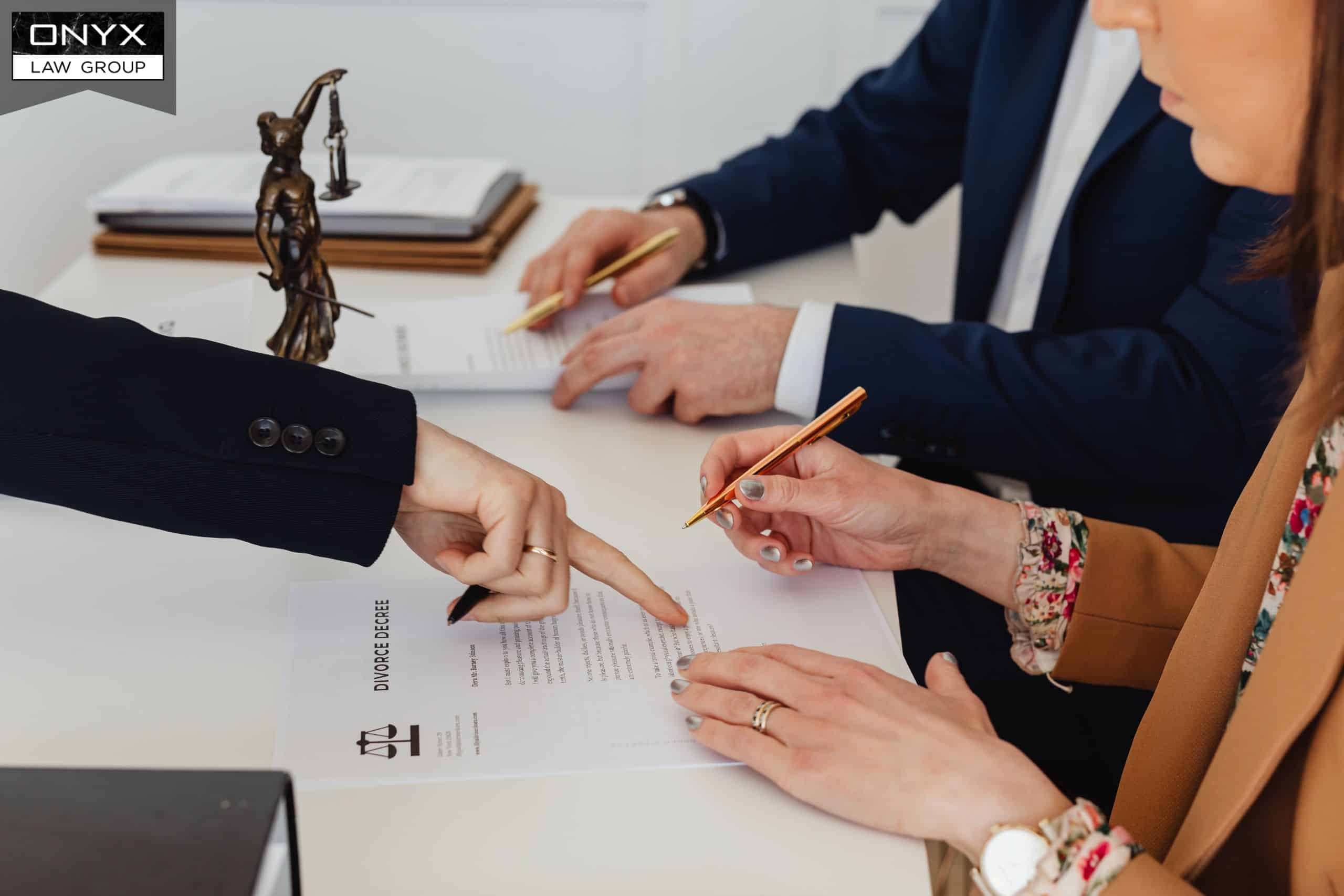
The following steps are involved in getting a divorce without a lawyer:
1. Assess the Complexity of Your Case
Do you still need to sort out property issues, parenting plans, support issues, etc.? Are you planning to use cruelty or adultery as the grounds for divorce? If you answered yes to either of those questions, a DIY divorce may not be right for you.
2. Gather Relevant Information and Documents
You need certain supporting documents and information to complete a divorce application, including an original of your Marriage Certificate or a certified true copy of your registration of marriage, a copy of your Separation Agreement (if you have one), and any relevant court orders (for example, if you brought a family court case in Provincial Court to settle all issues, and are now applying for a divorce order in the Supreme Court).
If you married in BC, you can request your Marriage Certificate from BC’s Vital Statistics Agency using this information.
3. Fill out Court Forms
If you are applying for a sole desk order divorce, you must fill out a Notice of Family Claim (Form F3) and a Registration of Divorce Proceedings form. If you are applying for a joint divorce, you must fill out a Notice of Joint Family Claim (Form F1) and a Registration of Divorce Proceedings form. Ensure that forms are complete and accurate—if they aren’t the Court Registry will refuse to accept them for filing. You can find blank BC Supreme Court forms here.
If you have dependent children, additional affidavits, such as the Child Support Affidavit (Form F37), may be required to show that reasonable financial arrangements have been made for their care. Incomplete forms or missing documents will result in delays, so double-check all submissions before filing them at the Supreme Court Registry.
4. Pay Your Fees – How Much Does It Cost to Get a Divorce in BC Without a Lawyer?
Take three copies of all court forms and supporting documents to the most convenient BC Supreme Court Registry for filing. You will have to pay court fees to file your divorce application; at the time of writing, the fee is $210. When applying for the divorce order, an additional $80 fee is required. Additional expenses may include service fees for delivering documents to your spouse, costs for notarizing affidavits, and obtaining certified copies of necessary documents like your marriage certificate.
5. Serve Divorce Papers to Your Spouse
Your filed divorce application must be served by personal service. You can’t personally serve your spouse—someone else who is at least 19 years old must serve it for you. It can be a friend or relative, or you can hire a professional process server. The person who serves the divorce application must swear an affidavit of service (Form F15).
Once service has taken place, you must wait 30 days before moving to the next step. If you filed a joint application, you don’t need to serve your spouse or wait 30 days.
6. Apply for a Divorce Order if Your Spouse Doesn’t Respond

Once the 30 days are up, if there is no response filed by your spouse, you can then apply for a divorce order by submitting the final round of forms, including an Affidavit — Desk Order Divorce (Form F38), a Child Support Affidavit (Form F37) if you have dependent children, a Requisition (Form F17), a Certificate of Pleadings (Form F36), and a draft Final Order (Form F52). You will need a lawyer or notary to commission your Affidavits.
Again, be sure that your forms are complete and accurate—if they aren’t, the Court Registry will refuse to accept them for filing. When you file these forms with the Court Registry, you will again need to pay filing fees, which are $80 as of the time of writing.
A judge will review all your filed materials and if satisfied, will sign your divorce order. If the judge reviews your filed materials and is not satisfied that there are proper financial arrangements in place for your children, you may have to appear in court.
The Court Registry will notify you when your signed divorce order is ready. You must serve a copy of the divorce order on your former spouse as soon as possible using ordinary service (e.g., mail, fax, email).
If you want to save on costs while avoiding delays due to errors, carefully review all forms and requirements before filing.
Want to Consult with a Divorce Vancouver Lawyer?
Getting a divorce in BC can absolutely be done without a lawyer. However, contacting a divorce lawyer is the best way to ensure that your rights, your children, your assets, and your future are protected. The process requires careful preparation and attention to legal details. For those seeking a simpler and faster process, an uncontested divorce is often the best route, provided all family law issues are resolved. However, when stakes are high, such as in contested cases or when children are involved, the expertise of a divorce lawyer can make a significant difference.
Onyx Law Group is here to help. Our experienced Vancouver divorce lawyers can help you navigate the legal system and achieve a fair result for you and your family. Reach out to Onyx Law Group today at (604) 305-2923 to get trusted advice and a clear plan for securing your divorce order.