


A person is entitled to choose an executor to manage their estate, and courts generally respect that choice, but the executor still has a legal duty to communicate with beneficiaries and act in the estate’s best interest. When an executor is not communicating with beneficiaries, the first step is to send a polite written request for updates, as it is often just a matter of delay or pressure. If there is still no response, an estate lawyer can step in to enforce your rights and, if necessary, seek court intervention to compel the executor to act or have them removed.
If you are facing uncertainties regarding communication with your executor and what you need to do in that situation, seeking legal advice is necessary. Don’t hesitate to reach out to Onyx Law Group today for a free consultation, and get expert legal guidance and support from our wills and estates lawyers to ensure your rights are protected.
In this blog, you’ll learn the obligations of an executor, especially regarding communication, and what to do when they are not communicating with their beneficiaries.
Common Reasons Executors Fail to Communicate With Beneficiaries
Executors do not always communicate well with beneficiaries. There are a few common reasons. Some simply lack knowledge of their duties. Others feel overwhelmed by the process. Estate administration can be confusing. There are legal steps, paperwork, and deadlines. Many executors are learning as they go.
Emotional stress also plays a role. The executor is often grieving the same loss. That can make communication harder. In some cases, there may be family tension involving other beneficiaries. Such issues can lead to avoidance or delayed updates. Occasionally, an executor may withhold information on purpose. This might happen due to conflict, mistrust, or misunderstanding of their authority.
Poor communication can slow down the entire estate process. Beneficiaries may feel left out or frustrated. Such feelings can lead to disputes and even legal action. Under Canadian law, executors have a duty to keep beneficiaries reasonably informed. Clear communication in a timely manner helps build trust. It also keeps the administration running smoothly.
What Are the Legal Duties of an Executor?

An executor plays a very important role in managing a deceased’s estate. Generally speaking, an executor is a personal representative of an estate and may be appointed in a will or through a court appointment. They must see to the following essential estate administration tasks while honoring their fiduciary duty:
- Gather names of all beneficiaries and rightful heirs
- Inventory the estate’s assets and debts
- Obtain probate if necessary
- Take control of the estate’s assets (for example, transfer ownership of real estate property and collect any debts owed to the deceased’s estate)
- Pay the debts of the estate
- File final income tax returns for the deceased and for the estate
- Sell property and estate assets as necessary
- Distribute the estate in accordance with the instructions in the Last Will and Testament
- Prepare an accounting of estate assets, debts, receipts, disbursements, and distribution of the estate for approval by the beneficiaries and rightful heirs (or the court).
Depending on the situation, the executor may have additional responsibilities, including involvement in estate litigation brought by a disappointed beneficiary seeking to vary the will or will disputes attacking the validity of the will on the basis of undue influence or lack of capacity. Executors are also legally obligated to act honestly, protect the estate, and manage estate finances in the best interests of beneficiaries.
What Does an Executor Have to Disclose to Beneficiaries?
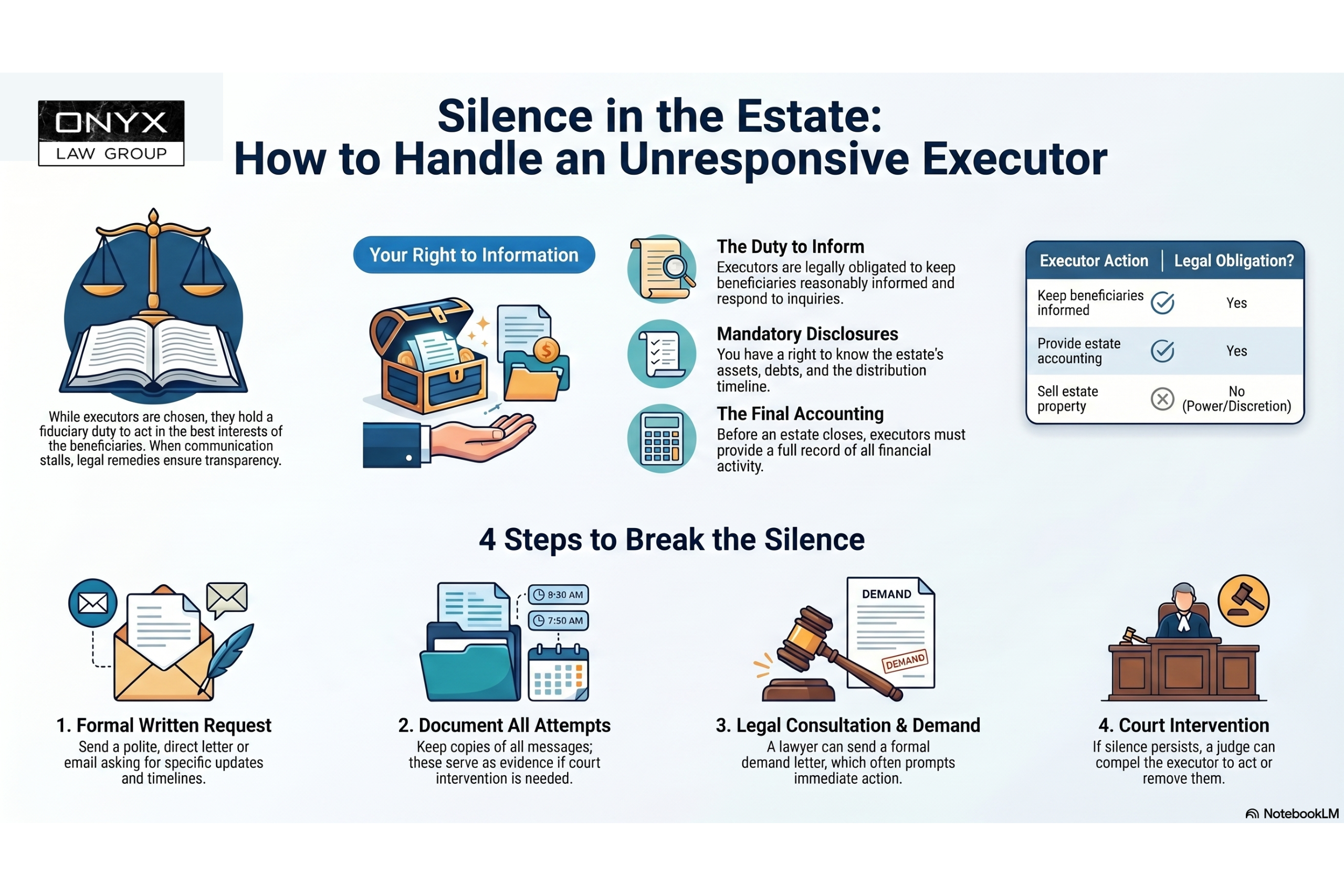
An executor has a legal duty to keep beneficiaries reasonably informed during the estate administration process. This means they must respond to questions and provide updates in a timely way. While “reasonable” depends on the situation, it generally includes sharing key information about the estate. This helps ensure transparency and builds trust throughout the process.
Beneficiaries should expect to be informed about important details such as the estate’s assets and their value, outstanding debts, and how those debts are being paid. Executors should also explain how and when assets will be distributed, including plans for paying beneficiaries. Updates on estate income, expenses, major transactions like property sales, and overall progress are also expected. Before the estate is closed, a final accounting of all financial activity should be provided.
That said, executors do not need to involve beneficiaries in every decision or provide constant updates. They are not required to share real-time financial details or seek approval for each action. Instead, the focus is on meaningful updates that show the estate is being properly managed. If delays happen, or if there are disputes or legal issues, the executor should explain what is going on, answer inquiries, and continue to provide regular updates until the matter is resolved.
What Are the Legal Rights of Beneficiaries When the Executor Is Silent?

Beneficiaries in Canada have options even when an executor remains silent. You have a legal right to basic information about the estate. This includes knowing what assets exist, how they are being managed, and when distributions may happen. You can also request a formal accounting, which is a clear record of all financial activity in the estate. This transparency is mandatory, as it is part of the executor’s job.
In British Columbia, executors have a duty to act honestly and keep beneficiaries reasonably informed. They are expected to communicate progress, respond to reasonable requests, and avoid unnecessary delays. Silence or avoidance can raise concerns about how the estate is being handled. Executors have some flexibility in managing timelines, but they cannot ignore beneficiaries or withhold important details without a valid reason.
If an executor fails to meet these duties, beneficiaries can take legal action. You may apply to the court to compel the executor to provide information or pass on their accounts. In more serious cases involving executor misconduct, the court can have the executor removed and appoint a new executor. Probate courts play a crucial role in resolving these disputes and ensuring the proper handling of estates. If communication breaks down, seeking legal guidance can help you protect your rights and move the estate administration process forward.
| Duty / Power Description | Legal Obligation (Yes/No) | Typical Challenges | Beneficiary Impact |
|---|---|---|---|
| Locate and secure estate assets | Yes | Finding hidden or complex assets | Ensures estate value is preserved |
| Apply for probate | Yes (if required) | Court delays, incomplete paperwork | Delays can slow distribution |
| Keep beneficiaries informed | Yes | Managing expectations, communication gaps | Lack of updates causes frustration and mistrust |
| Provide estate accounting | Yes | Detailed record-keeping is time-consuming | Transparency builds trust; absence raises concerns |
| Pay debts and taxes | Yes | Identifying all liabilities, tax complexity | Reduces final inheritance if not managed properly |
| Distribute assets according to the will | Yes | Disputes among beneficiaries | Directly affects who gets what and when |
| Sell estate property | No (Power) | Market conditions, timing decisions | May impact final value received |
| Invest estate funds | No (Power) | Risk management, poor investment choices | Gains or losses affect beneficiary shares |
| Hire professionals (lawyers and accountants) | No (Power) | Cost control, choosing the right experts | Fees reduce estate value but may improve handling |
| Delay distribution for valid reasons | No (Power, within limits) | Misuse of delay, lack of communication | Can cause financial stress for beneficiaries |
| Defend the estate in legal claims | No (Power) | Legal costs, prolonged disputes | Protects estate but may reduce assets |
What to Do When the Executor Is Not Communicating With Beneficiaries?
We often remind clients, “Communication breakdowns may happen not out of bad intent but because executors underestimate how complex estate administration can be.” Lack of communication can be frustrating. It can also create uncertainty about the estate. Beneficiaries have the right to ask for information. And in many cases, a simple request can resolve the issue. But if it does not, there are clear steps you can take.
Step 1: Attempt Formal Written Communication Requesting Updates
Start with a clear written request. Ask for specific updates about the estate and keep your tone polite and direct.
Step 2: Consult a Probate or Estate Lawyer for Advice
If you get no response, speak with a probate lawyer. They can explain your rights and guide your next move.
Step 3: Consider Applying to the Court for Executor Removal or Enforcement
If communication fails, you may need to take legal action. A judge can order the executor to act or, in serious cases, remove them through a court application.
Step 4: Keep Detailed Records of All Communication Attempts
Track every message you send and receive. These records can support your position if legal steps become necessary.
It is also important to consider the emotional and financial impact. Disputes can strain family relationships. They can also increase costs and delay the estate distribution. Taking measured steps can help you protect your interests while ensuring a smoother process.
Tips for Effectively Communicating With the Executor and Resolving Any Issues
All communication with the executor should be clear and courteous. Estate matters can be contentious and highly emotionally charged, and a beneficiary should not take that emotion out on the executor. Communications can be more informal, e.g., emails and phone calls. However, if emails and calls are not being returned, a written letter from the beneficiary to the executor raising specific concerns can prompt the executor to address the issues.
For example, a beneficiary named Sarah noticed she hadn’t received any updates from the executor for several months after her father’s passing. She first sent a polite written email asking for an update on the estate assets and timeline, but received no response.
After waiting a reasonable time, she reached out to an estate lawyer at Onyx Law Group for guidance. The lawyer reviewed her situation and sent a formal demand letter requesting an accounting and proper updates from the executor. Once the executor received legal notice, communication quickly resumed, and the executor provided a full estate update. With legal support ensuring transparency, the estate administration moved forward properly and Sarah was able to receive her inheritance without further delay.
How to Formally Request Information from the Executor

When you need information from an executor, it’s best to keep your request clear, polite, and in writing. A formal letter or email works well because it creates a record of your communication. Start by identifying yourself as a beneficiary and referencing the estate. Then state exactly what updates you are requesting, such as the status of assets, debts, or expected timelines for distribution. Keep your tone respectful, even if you are frustrated, because such an approach helps avoid unnecessary conflict and keeps the focus on getting answers.
You can structure your request around specific points like: “Please provide an update on estate assets,” “Please share the current stage of probate,” or “Please provide a summary of any estate accounting completed so far.” It also helps to ask for a timeline for the next update. Most importantly, always keep copies of your emails, letters, and any replies. If communication breaks down later, this documentation can support your case if you need to involve the court or seek legal help.
What Happens When an Executor Refuses to Act?
When an executor refuses to act, avoids communication, or takes too long to administer an estate, beneficiaries have options. A common first step is to apply to the court to compel the executor to do their job. This can push them to move forward with managing the estate and distributing assets. This approach is often preferred because it helps restore order without immediately resorting to the more complex process of removing the executor.
In more serious situations, it may be necessary to ask the court to remove the executor altogether. Courts respect the will-maker’s choice, so removal only happens in certain situations. These include unreasonable delays, dishonesty, conflict of interest, or poor management of estate assets.
Simple disagreement or tension between the executor and beneficiaries is usually not enough. Beneficiaries can also request a “passing of accounts,” which allows the court to review how the estate has been handled and adjust the executor’s compensation if needed.
Why Is It Important to Execute Wills on Time?
Executing wills on time helps prevent legal complications. Delays can lead to disputes among beneficiaries and increase the risk of legal challenges, which can result in higher costs and prolong the probate process. Timely execution ensures that the estate is settled smoothly and according to the deceased’s wishes.
Another key reason is the prompt distribution of assets. Beneficiaries often depend on the inheritance, and delays can cause financial stress. Executing the will without unnecessary holdups ensures that assets are delivered when needed, providing stability and support to those involved
Timely execution also prevents the deterioration of certain assets. Real estate, investments, and other properties can lose value if not properly managed or sold promptly. Acting quickly helps maintain or maximize the value of these assets for the beneficiaries.
Meeting tax deadlines is also critical. Proper execution guarantees timely settlement of estate taxes and other financial obligations, preventing penalties or interest charges. This protects the estate’s value and simplifies the financial aspects of the probate process.
Finally, executing wills on time reduces the emotional strain on beneficiaries. During a difficult period, a quick resolution brings closure and certainty. By honoring the deceased’s wishes efficiently, the executor can bring peace of mind to all involved and preserve the integrity of the will.
What Are Executor Fees and How Do They Impact Communication?
Executor fees are the payment an executor receives for handling an estate. In British Columbia, these fees are not fixed by law but are guided by the court and usually fall within a range of about 1% to 5% of the estate’s value, depending on complexity, time spent, and the work involved. Executors can also be reimbursed for reasonable expenses they incur while managing the estate. The goal is to fairly compensate the executor, not to create a profit.
However, fee disputes can sometimes affect communication. If beneficiaries feel the fees are too high or unclear, tensions can build quickly. On the other side, executors may become less responsive if they expect disagreement over compensation. Delays, misunderstandings, or a breakdown in trust between both parties can occur, particularly when they do not share updates openly.
Beneficiaries have the right to clear information about all fees and expenses taken from the estate. Executors are expected to be transparent and provide proper accounting when asked. If there is confusion or concern, you can request a detailed breakdown of how fees were calculated and what expenses were paid. This helps ensure accountability and keeps the estate administration fair and open.
Need Help Communicating With an Executor?
Clear, respectful communication is key when dealing with an unresponsive executor. Begin with polite, straightforward requests for information, and keep a record of your communications if the situation does not improve. If conversations stall or concerns go unanswered, a lawyer’s involvement can often prompt action and clarify your rights. Ultimately, the goal is to resolve issues without conflict, but if needed, the law offers remedies to protect your interests and ensure the estate is properly managed.
If you are dealing with an executor not communicating with beneficiaries or meeting the executor’s duties imposed by law, we encourage you to reach out to discuss your options. A conversation with an experienced estate lawyer can help you determine whether the actions violate the executor’s duties.
Our team at Onyx Law Group is committed to fully understanding our clients’ concerns and is dedicated to offering legal solutions to meet their personal and practical objectives. Our deep understanding of estate litigation allows us to confidently manage executor disputes. We believe it’s important to know your legal rights and obligations before making any decisions. That’s why we offer a 30-minute free consultation with our probate and estate lawyers to give you the opportunity to discuss your matter with a passionate and knowledgeable estate attorney who can advise you on the best steps forward.
Frequently Asked Questions
Below are some frequently asked questions about executors who are not communicating with beneficiaries. These answers explain common concerns in simple terms.
What Can Beneficiaries Do if the Executor Ignores Their Requests?
Beneficiaries can begin with a written request for updates. If the executor still refuses to respond, they may consult a lawyer or apply to the court to compel the executor to provide information.
How Long Does an Executor Have to Communicate With Beneficiaries?
There is no single deadline that applies in every case. Executors are expected to respond within a reasonable time and keep beneficiaries informed throughout the probate process.
Can Beneficiaries Remove an Executor for Non-Communication?
Yes, in serious cases. If delays, silence, or misconduct harm the estate administration, the court may remove the executor and appoint someone else.
What Costs Are Involved in Enforcing Executor Duties?
Costs may include legal fees, court filing fees, and other professional expenses. In some cases, the court may decide who is responsible for those costs.
How Does Probate Affect Executor Communication?
The probate process can create delays because court approval and paperwork take time. Even so, executors should still communicate updates and explain the current stage of the process.
Disclaimer: The information provided on this blog is for general informational purposes only and does not constitute legal advice. Reading this content does not create an attorney-client relationship. Laws and regulations vary by jurisdiction and may change over time, so you should consult a qualified estate and trusts attorney directly for advice regarding your specific situation. Past examples, case studies, or hypothetical scenarios are illustrative only and do not guarantee similar results.