


We live in an interconnected world. We travel more often, communicate over great distances with ease, and are much more likely to try life in a new country than any generation before us. It’s little wonder that our families and personal relationships often have an international aspect. That can present logistical, language-based, and cultural complications, even when a marriage is going well. Those complications can feel insurmountable when the marriage breaks down.
International Family Law in Canada encompasses a range of legal issues that arise when family matters cross borders. This area of law deals with complex situations such as child custody disputes, divorce, and property division, where one or both parties may reside in different countries.
A divorce that involves a spouse in another country, assets in a foreign jurisdiction, or the question of international relocation of your children will be more complex than a divorce than involves only one legal system. Protect yourself by consulting with a lawyer experienced in international family law cases. The team at Onyx Law Group has expertise in handling international divorce and family law matters. Contact us today for an initial consultation.
In today’s article, we’ll talk about issues unique to international family law cases, including division of property located in a foreign country and cross-border child custody. We’ll also talk about Canada’s family law system and how to determine whether you can use Canadian courts and Canadian laws to resolve international family law matters.
What Is International Family Law in Canada?

Cross-border family cases typically involve a web of laws, both foreign and domestic. There are often conflicts between laws, and there may also be competing court proceedings in multiple jurisdictions. The laws that apply in your case can have a very significant impact on the outcome.
Federal Law
The Divorce Act is the Canadian law that applies when spouses want to legally end their marriage. The federal Divorce Act addresses family-related legal matters such as child support, spousal support, and parenting arrangements (decision-making, parenting time, etc.). It also sets out the rules and requirements that must be met to get a divorce in Canada.
Provincial Law
Each province in Canada also has its own legislation that applies to family law cases brought within its jurisdiction. In British Columbia, the Family Law Act deals with child support, spousal support and parenting time, but it also deals with the division of property, debt, and getting protection orders to address family violence.
International family law cases frequently involve other pieces of legislation (Canadian law unique to each province and/or the laws of a foreign country). You may need to rely on Canadian law to determine which court has jurisdiction to hear your case or how to go about enforcing foreign judgments. Or you may need to rely on the laws of a foreign country when your case is heard in a Canadian court. It all depends on the facts and legal issues in your case.
International Treaties and Conventions
There are several international treaties and conventions that have been adopted as part of our legal system, such as the Hague Service Convention and the Hague Convention on International Child Abduction.
How to Divorce an International Marriage

One of the biggest hurdles in international divorce cases is determining which country has jurisdiction. The legal test and factors the courts consider when deciding jurisdiction vary based on the issue at stake. Let’s have a look at jurisdictional requirements for divorce, property division, and issues relating to children.
Jurisdiction to Hear a Divorce Application
To be eligible for divorce in Canada, you must meet the provincial residency test set out in the Divorce Act. For example, British Columbia courts have jurisdiction to hear your divorce proceeding if either you or your spouse has lived in BC for at least one year or more and is still living in the province when the divorce application is filed. If that is not true for one or both of you, BC courts don’t have jurisdiction to hear your divorce application.
Even if the residency requirement is met, a spouse can argue that the Canadian court shouldn’t exercise its jurisdiction because a foreign court in another jurisdiction is the more appropriate forum to hear the case. See below for more on the forum non conveniens analysis.
Can Two International Visa Holders Divorce in Canada?
Generally, only Canadian residents can divorce in Canada. That includes Canadian citizens and permanent residents of Canada, assuming the residency requirement discussed above is met.
Anyone in Canada as a temporary resident may be able to divorce here if they or their spouse meets the residency requirement, but if you are a temporary resident, you should get legal advice before taking any steps. A divorce may impact your ability to stay in Canada if your status is linked to your spouse or your relationship status.
What Jurisdiction Handles Asset Division in an International Divorce?
The test for jurisdiction to hear property and spousal support claims is complex. When an international family law application is brought in Canada, the first step is for the court to decide whether it has “jurisdiction simpliciter” (in other words, does it have basic authority to hear the case). That can be established by the parties agreeing that the Canadian court has jurisdiction, or by parties “attorning” to the court’s jurisdiction by participating in the court proceedings.
If jurisdiction simpliciter is in question, the spouse asserting that the court has jurisdiction bears the burden of proving that it exists. The court will apply the “real and substantial connection” test to determine if there is a connection between the court and the subject matter of the case. The physical location of the parties, their property, and their assets are major factors, but not the only factors here.
Even if it’s established that the Canadian court has jurisdiction simpliciter, a spouse can argue that the court should decline to exercise jurisdiction because a foreign court is the more appropriate or more convenient court to decide the case. The spouse challenging jurisdiction must prove that the court in another country is clearly more appropriate.
At this second stage, the Canadian court will engage in the forum non conveniens analysis. The court will consider many factors at this stage, such as where the case can be more efficiently heard, the cost of transferring the case to another jurisdiction, the location of the parties and any evidence and witnesses, and the potential for competing judgments.
How Is International Property Dealt with in a Canadian Divorce?
Once it has been determined that a Canadian court has jurisdiction to hear your international family law case, the next consideration is which law applies. There are situations where a Canadian court will decide the case by applying laws from other jurisdictions.
For example, if you have a prenuptial agreement or marriage contract, it may specifically state that the laws of another country govern any issues that arise from it. If foreign law applies, testimony as to the law of that jurisdiction will be required, and the outcome may be very different than what Canadian law requires.
Assuming Canadian law applies to your property dispute, you must then turn to the relevant provincial family law. Property issues in BC court are governed by BC family law, while property issues in Ontario court are governed by Ontario law, and so forth.
For more on how BC’s Family Law Act approaches property division and what you are entitled to when BC law applies to your case, see here, or reach out to our experienced family lawyers for advice customized to your situation.
International Assets in Divorce
There are unique issues in international divorce cases. It can be challenging to locate assets and determine what they are worth when they are in other jurisdictions. Property may include real property (houses, cottages, investment properties), or other types of assets such as bank accounts, investments, pensions, business interests, and trust property.
Once real property and other assets held inside and outside of BC have been identified and their value has been ascertained, the court will determine how the property is to be split among the spouses (in BC, the presumption is equal division). The tricky part in cross-boarder cases is that a court in one country doesn’t have authority to order the transfer of property located in another country.
Instead, BC courts can equalize the value of all property, including the value of property outside of Canada, and then order a spouse to satisfy the amount owing from real property and assets located in BC. It’s also possible for a BC court to make an “in personam” order directing the spouse who owns foreign assets to sell or transfer them to satisfy the family court judgment, but there can be challenges with enforcing a BC court order in the country where the property is situated.
International Custody Divorce
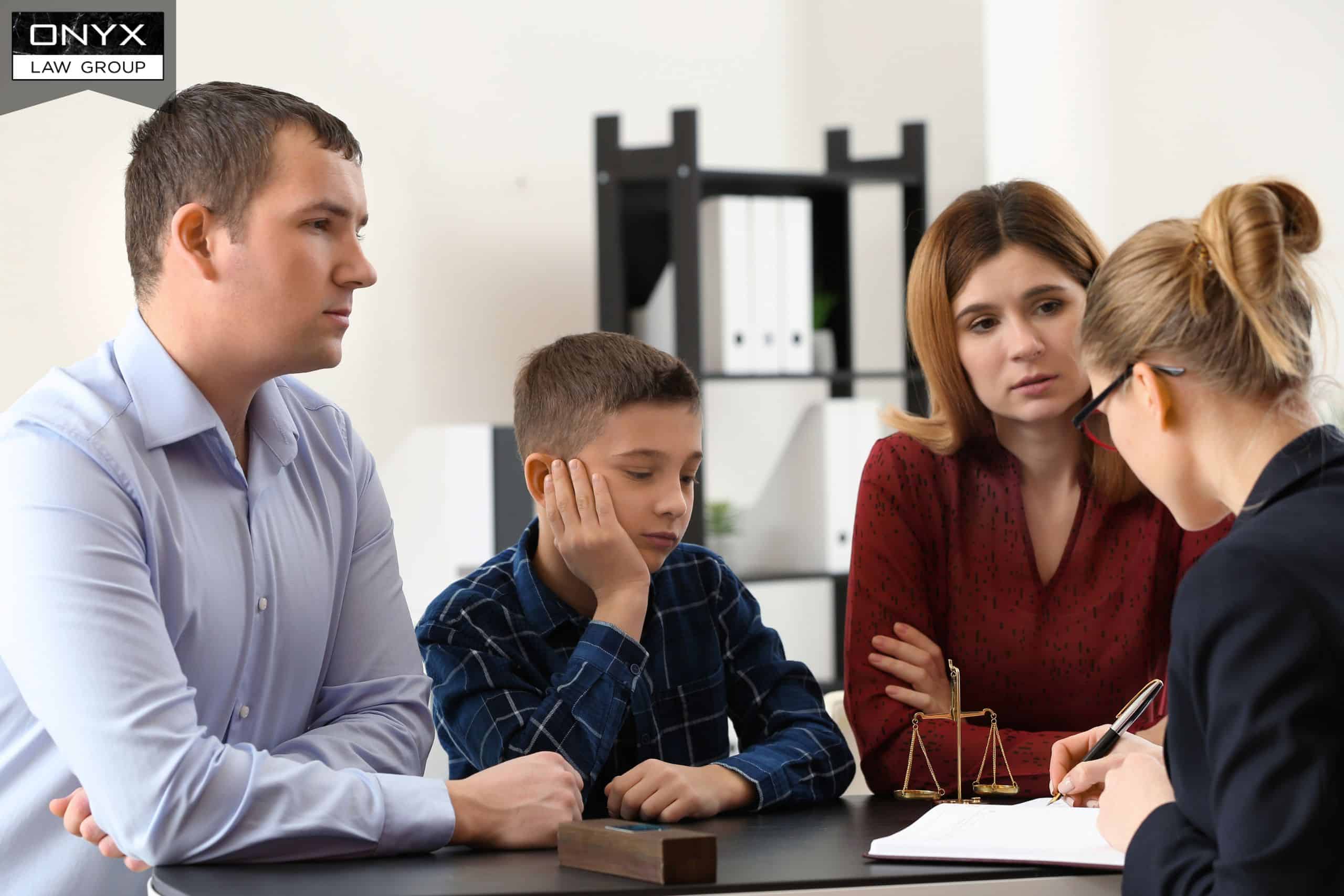
The test for jurisdiction in international child custody cases in British Columbia is found in our province’s Family Law Act. Section 74 of the Act states that BC courts have jurisdiction if your child is habitually resident in BC when the application is filed (this is often—but not necessarily—where the child most recently resided).
If your child is not habitually resident in British Columbia, the BC court may still obtain jurisdiction if all the conditions in the six-part test set out in s. 74(2)(b) of the Act are fulfilled. Our family lawyers previously discussed the factors, which include whether evidence concerning the best interests of the child is available in BC.
It’s also possible for the court to decide to act if the child is physically present in BC—but not habitually resident—and would suffer serious harm if the child were removed from BC or returned to one of the parents.
In all cases, the BC court may decline to act if the courts of another jurisdiction are more appropriate to hear the case and make decisions pertaining to the children.
Assuming the BC court has jurisdiction, it can make orders for child custody, decision-making, the schedule for parenting time, and child support. It can also make orders pertaining to international relocation with children, the logistics of travel to facilitate parenting time, restrictions on international travel with the child, and/or orders dealing with the return of a child wrongfully withheld in another country (child abduction).
What Happens if One Parent Takes a Child to Another Country?
Child abduction is always a serious consideration in international family law cases. A parent may flee with children to another country for safety reasons, to avoid the application of Canadian laws, to alienate the other parent, or simply because they failed to follow proper procedure for international relocation. Canadian law requires proper procedure to be followed; a parent is not permitted to unilaterally change a child’s place of residence.
If your children are taken to another country without your consent and the other parent will not return the child, the first step is to determine if the Hague Convention on International Child Abduction applies. If the country has signed on to the Hague Convention on International Child Abduction, you’ll need to commence Hague proceedings in that country to have your child returned to Canada. The Hague Convention applies the “habitual residence” test and offers a speedier procedure to get an order for your child’s return.
If your child is being wrongfully retained in a country that has not signed on to the Hague Convention on International Child Abduction, it will be more difficult. You’ll have to start a custody case in that country, asking the foreign court to order your child’s return. The country in question applies its own child custody laws to determine if your child should be returned to Canada.
Child and Spousal Support Across Borders
Children are entitled to have financial support from both parents, even if one parent lives in another country, and even if that parent never sees the children. Spouses may also be entitled to support (a.k.a. alimony or spousal maintenance). If you live in BC, you can apply here to get or change a support order. You may also be able to enforce a support order in BC that was made in another jurisdiction.
If the person owing support lives in a place that has a formal arrangement with BC regarding support, you’ll have to follow the correct procedure and use the proper forms. Depending on the circumstances, BC’s Interjurisdictional Support Orders Act, Canada’s Divorce Act, or the Hague Convention on the International Recovery of Child Support and Other Forms of Family Maintenance may apply to the making of a support order, changing a support order, or the enforcement of foreign judgments awarding support.
How Can an International Divorce Lawyer Assist with Cross-Border Cases?

If your divorce involves an international aspect, it’s highly recommended that you hire a family lawyer with international divorce experience. People who hire lawyers specializing in international divorce get the benefit of advice and assistance with matters such as:
- the crucial differences between Canadian laws and foreign laws
- which jurisdiction is best to hear your case
- how to comply with the complex rules of international service
- what documents you will need and how to prepare them for use in your case (translation, notarization, certification/Apostille)
- locating and valuing assets and real property located in another country
- obtaining court orders to protect assets or prevent them from being depleted
- navigating international treaties and conventions
- enforcement of court orders, whether made in Canada or another country.
In addition, a lawyer with expertise in handling international divorce cases can advise you on alternative dispute resolution options. Court proceedings are always available, but you may want to explore alternatives to court such as mediation and arbitration that may save time, money, and stress.
Contact a Lawyer Specializing in International Divorce
International divorces are very challenging. Just figuring out where to begin can be overwhelming. All you need to do to start the process is reach out to a lawyer with expertise in international divorce matters.
The lawyers at Onyx Law Group in Vancouver have legal expertise in multi-jurisdictional divorces. Our team of family lawyers can provide you with advice and support, whatever legal issues you may be facing. Let us handle the legal complexities so you can move forward with confidence towards a fresh start.
Contact us today to schedule your initial consultation.